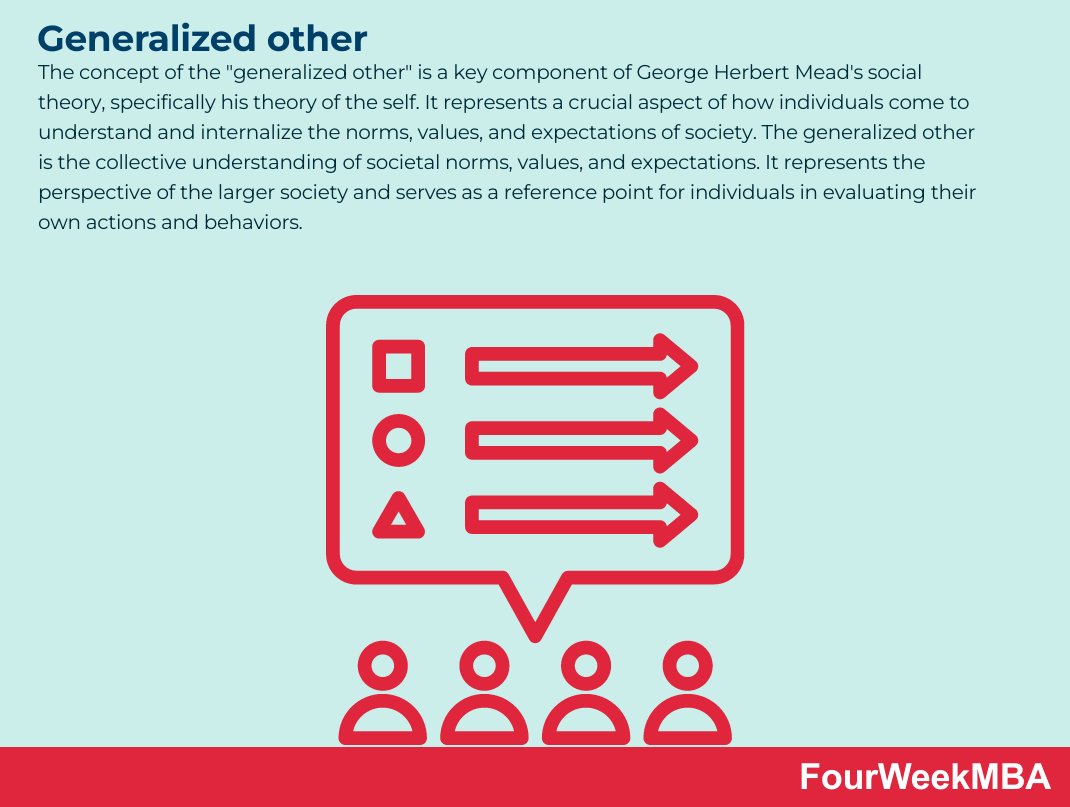
The concept of the generalized other can be defined as the collective viewpoint of society. It represents the attitudes, beliefs, and expectations that individuals in a community hold. In simple terms, the generalized other shapes how we perceive ourselves and others in the context of social interactions. Understanding this concept is crucial for navigating the complexities of human relationships and societal norms. Let’s delve deeper into what the generalized other truly means and its impact on our daily lives.

Exploring the Concept of the Generalized Other
Welcome, curious minds! Today, we delve into the fascinating world of sociology to unpack the concept of the generalized other. Have you ever wondered how we form our sense of self and identity in society? Well, the generalized other plays a significant role in shaping who we are and how we interact with the world around us.
Understanding the Generalized Other
So, what exactly is the generalized other? In simple terms, it refers to the collective societal expectations and attitudes that influence an individual’s behavior and self-concept. Imagine it as a mirror reflecting back to us the norms, values, and beliefs of the society we live in.
Think of the generalized other as a silent observer, constantly guiding and evaluating our actions based on the socially accepted norms. It helps us understand how society views us and how we, in turn, perceive ourselves in relation to others.
The Role of the Generalized Other in Socialization
From a young age, we learn to internalize the expectations of the generalized other through socialization. Family, peers, the media, and other social institutions all play a part in shaping this collective consciousness that influences our behavior.
Children, for example, pick up on cues from their caregivers and peers about what is considered acceptable or unacceptable in their social environment. As they grow older, these internalized norms guide their actions and decisions, helping them navigate complex social interactions.
Impacts of the Generalized Other on Identity
Our sense of self is intricately linked to the feedback we receive from the generalized other. Positive reinforcement and validation from society can boost our self-esteem and confidence, while constant criticism or rejection can erode our self-worth.
It’s essential to strike a balance between fitting into societal norms and staying true to our authentic selves. The pressure to conform to the generalized other’s expectations can sometimes lead to internal conflicts and identity crises. Finding a sense of belonging while maintaining individuality is a delicate dance we all must master.
Challenges and Critiques of the Generalized Other
While the generalized other serves as a compass for social behavior, it is not without its limitations and critiques. Some argue that relying too heavily on societal norms can stifle creativity and innovation, leading to conformity and homogeneity.
Furthermore, the generalized other is not a monolithic entity but rather a dynamic and evolving construct shaped by cultural, historical, and contextual factors. What may be considered the norm in one society could be viewed quite differently in another, highlighting the complexity of navigating multiple social realities.
Embracing Individuality Within the Collective
As we wrap up our exploration of the generalized other, let’s remember that while society plays a significant role in shaping our identities, we also have the power to challenge and redefine those norms. Embracing diversity and individuality enriches the fabric of our collective consciousness, fostering a more inclusive and empathetic society.
So, the next time you find yourself conforming to the expectations of the generalized other, pause for a moment and reflect on whether it aligns with your true values and beliefs. Remember, you are a unique individual with the power to shape your identity in a way that honors both the collective and the self.
Until next time, keep questioning, keep exploring, and keep embracing the beauty of your authentic self within the vast tapestry of human society.
Thank you for joining me on this insightful journey into the world of the generalized other!
Five minute sociology #3: Mead's Generalized Other
Frequently Asked Questions
What role does the concept of the generalized other play in sociological theory?
In sociological theory, the concept of the generalized other refers to the societal expectations and norms that individuals internalize through socialization. It helps individuals understand how society views and expects them to behave in various social contexts.
How does the generalized other influence individual behavior in social interactions?
The generalized other influences individual behavior in social interactions by shaping how individuals perceive themselves in relation to others. This concept guides individuals in understanding the appropriate roles, attitudes, and behaviors expected of them in different social settings.
What are some examples of how the generalized other can impact social identity?
One example of how the generalized other can impact social identity is through gender norms. Society’s expectations of how males and females should behave influence individuals’ understanding of their own gender identity. Another example is cultural norms, where individuals internalize societal expectations of how to interact and communicate based on their cultural background.
Final Thoughts
In conclusion, the “generalized other” refers to society’s collective expectations and attitudes that influence an individual’s self-concept and behavior. This concept, coined by George Herbert Mead, emphasizes the role of social interactions in shaping one’s identity. By considering the perspectives of others, individuals develop a sense of self-awareness and social consciousness. Understanding the generalized other helps us comprehend how societal norms and values impact our thoughts and actions. Embracing this concept fosters empathy, tolerance, and a deeper connection with the world around us.