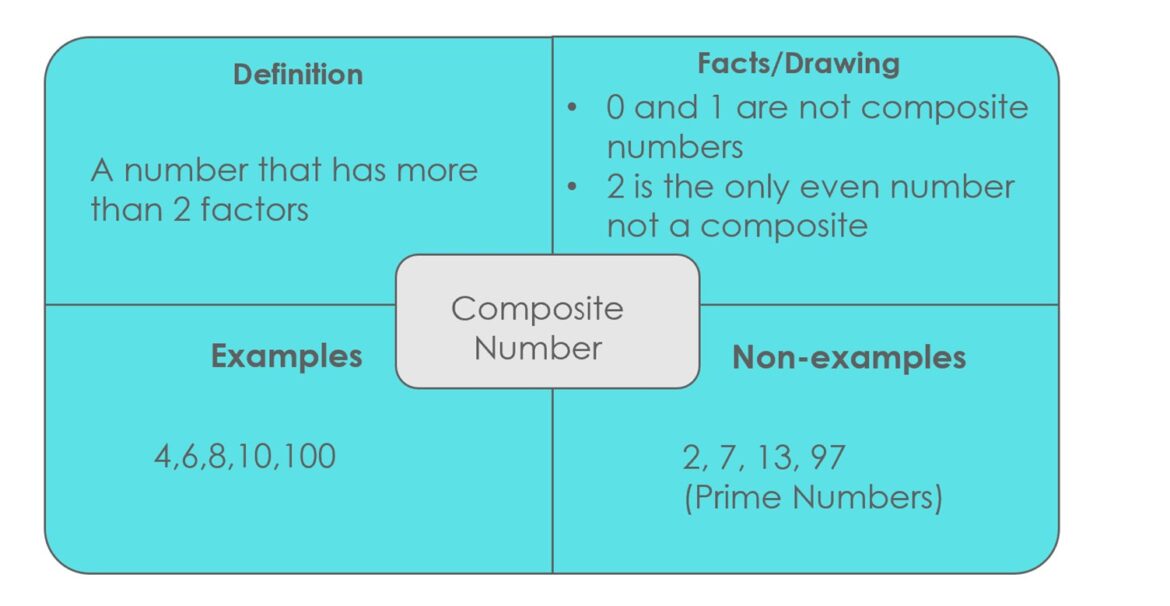
A non-example in math is a concept that helps clarify what something is not. By understanding what does not fit a particular definition or rule, we can enhance our comprehension of the subject matter. Non-examples play a crucial role in sharpening our critical thinking skills and deepening our understanding of mathematical concepts. In this article, we will delve into the significance of non-examples in mathematics and how they contribute to a more robust grasp of mathematical principles. Let’s explore the world of non-examples in math and unlock their hidden value together.

Understanding Non-Examples in Math: A Complete Guide
Introduction to Non-Examples
Math can sometimes feel like a tricky puzzle, with numbers and shapes that need to fit together just right. But have you ever thought about what happens when things don’t quite add up? That’s where non-examples come in! Non-examples are like the “Oops!” moments in math – they show us what doesn’t work and help us learn even more about what does. Let’s dive into the fascinating world of non-examples in math and uncover their importance in understanding concepts.
What Are Non-Examples?
Imagine you’re learning about shapes in math class. Your teacher holds up a square and asks, “What shape is this?” You confidently say, “A square!” Now, what if your teacher holds up a triangle next? That’s where non-examples come into play. The triangle is a non-example because it’s not a square. Non-examples are objects or ideas that do not fit a particular rule or definition.
Why Non-Examples Matter
Non-examples help us sharpen our understanding by showing what doesn’t belong or work within a given concept. They challenge us to think critically and refine our knowledge. By encountering non-examples, we learn to differentiate between correct and incorrect solutions, enhancing our problem-solving skills.
Types of Non-Examples
There are different types of non-examples in math, each serving a unique purpose in highlighting misconceptions and reinforcing learning. Let’s explore some common types of non-examples:
Contrasting Examples
Contrasting examples emphasize the differences between two or more concepts. For instance, if you’re learning about even numbers, an odd number would be a contrasting non-example. Contrasting examples help us grasp the boundaries of a concept by showcasing what doesn’t fit.
Common Misconceptions
Non-examples based on common misconceptions are particularly helpful in addressing prevalent errors that students may encounter. By presenting these misconceptions and explaining why they are incorrect, students can better understand the correct concepts.
Boundary Cases
Boundary cases are non-examples that test the limits of a rule or definition. They challenge us to think beyond the obvious and consider scenarios where the rules may not apply. Exploring boundary cases can deepen our understanding of mathematical concepts.
Examples vs. Non-Examples
Differentiating between examples and non-examples is crucial in developing a strong grasp of mathematical concepts. While examples illustrate how a concept works, non-examples show us what doesn’t work. Let’s look at a simple comparison:
Imagine you’re learning about multiplication, and your teacher gives you two examples: 3 x 4 = 12 and 5 x 2 = 10. These are examples that demonstrate how multiplication works. Now, if your teacher gives you an equation like 7 + 2 = 10, that would be a non-example because it doesn’t involve multiplication.
By studying both examples and non-examples, we can deepen our understanding of mathematical principles and avoid common pitfalls.
Practical Application of Non-Examples
Non-examples aren’t just abstract concepts – they have real-world applications that extend beyond the classroom. Let’s explore how non-examples play a vital role in everyday problem-solving:
Identifying Errors
In real-life situations, being able to identify errors or incorrect solutions is crucial. Non-examples teach us to spot mistakes and refine our problem-solving skills. Whether it’s calculating a bill at a store or measuring ingredients for a recipe, the ability to recognize non-examples helps us avoid errors.
Critical Thinking
By working with non-examples, we strengthen our critical thinking skills. When faced with a problem, we learn to consider different perspectives and analyze why certain approaches may not work. This analytical mindset is invaluable in various aspects of life, from decision-making to problem-solving.
Enhancing Creativity
Non-examples encourage us to think outside the box and explore multiple solutions to a problem. By challenging traditional methods and exploring unconventional approaches, we foster creativity and innovation. This mindset of experimenting with non-examples can lead to groundbreaking discoveries and inventions.
In the world of math, non-examples serve as guiding lights, illuminating what doesn’t fit and nudging us toward a deeper understanding of concepts. By embracing non-examples, we hone our problem-solving skills, enhance our critical thinking abilities, and cultivate creativity. So, the next time you encounter a “Oops!” moment in math, remember that non-examples are not roadblocks but stepping stones to mathematical mastery. Embrace the power of non-examples, and let them guide you on your mathematical journey!
Math Non Example
Frequently Asked Questions
What is a non-example in math?
In math, a non-example refers to a scenario or concept that does not fit the definition or criteria of a specific mathematical concept. Non-examples are used to clarify misunderstandings and illustrate what a concept is not.
Can you provide an example to explain a non-example in math?
For instance, when explaining the concept of a prime number, the non-example would be any number that can be divided by numbers other than 1 and itself. So, if we consider the number 6, it is not a prime number because it is divisible by 2 and 3 in addition to 1 and 6.
How are non-examples helpful in understanding math concepts?
Non-examples play a crucial role in helping learners differentiate between what a concept is and what it is not. By highlighting what doesn’t fit a particular rule or definition, students can develop a clearer understanding of the concept being studied.
Why is it important to include non-examples when teaching math?
By incorporating non-examples in math instruction, teachers can prevent misconceptions and promote critical thinking skills. It encourages students to think beyond memorization and recognize the boundaries and exceptions within mathematical rules.
Final Thoughts
A non-example in math provides clarity by showing what something is not. By highlighting incorrect solutions or concepts, it helps learners understand the correct path to take. Non-examples challenge assumptions and encourage critical thinking, fostering a deeper understanding of mathematical principles. Embracing non-examples in math can lead to improved problem-solving skills and a more robust grasp of mathematical concepts.